Your technical skills got you the interview. Something in the behavioral round cost you the offer.
You’re technically strong. That’s not where offers slip. They slip in how your story lands. The rejection never tells you that.
Start your free Diagnostic →“We had a problem where our payments service kept going down at peak hours. The team looked into it for a few weeks, we tried a few things, and eventually it got much more stable.”
Their team fixed an outage. I can’t tell what this person diagnosed, decided, or shipped, or how big the problem even was.
“I owned our peak-hour payment outages. I traced them to connection-pool exhaustion, rebuilt the retry logic, and cut failures 92%, protecting roughly 2M monthly transactions.”
You did the work. US interviews only reward one way of saying so.
You can feel that gap. You just can’t see it in your own answers, so we built a way to hear it, and put a number on it.
We make the invisible part of the interview visible.
The Diagnostic is a real 5-minute behavioral interview with an AI trained on US hiring expectations. It probes and pushes back on vague answers. Exactly what you’ll face.
It scores your full session the way an interviewer would, then rewrites every answer line by line: the same story, reframed to land the way it should. You see exactly where the gap is, and what closing it is worth.
The question
“Tell me about a project you led.”
“So at my previous company, we had a data pipeline that kept failing during peak hours, and the whole team was under a lot of pressure to fix it. We looked into what was going on, tried a few different things, and after a couple of weeks we finally got it sorted out. Things improved and the business was happy.”
The work was real. The signals that win offers weren’t.
- Ownership Language2.0 / 10
- Quantified Impact1.8 / 10
- STAR Structure2.0 / 10
- Conciseness5.2 / 10
Six dimensions hardened against real interviews, validation calls, and hiring patterns.
Ownership Language
The WE:I ratio. Whether the interviewer can locate what you drove, not what the team did.
Quantified Impact
Whether your result arrives as a number or as an impression. “Things improved” versus “failures to zero in 60 days.”
STAR Structure
The story arrives in order, or the interviewer has to assemble it. A story, not a status update.
Conciseness
Focused but tight. US interviewers read rambling as unclear thinking, even when the content is strong.
Engagement
Whether the exchange feels like a conversation or a recital. A clarifying question before you answer reads as seniority, not hesitation.
Professional Tone
Hedging that reads as courtesy in one room reads as doubt about your own work in another. Same conviction, different signal.
What changed, and why
For each answer, a word-for-word rewrite with every change tagged to the rubric dimension it fixes — so you learn the rule behind the rewrite, not just the fix.
Every dimension scored separately
Your session is scored on all six, so a strong story with a weak result isn’t hidden inside one number. You see which dimension is costing you.
How close you are to ready
Every answer rolls up into one score, so you know how far you are from interview ready.
I’ve been on the other side of this table.
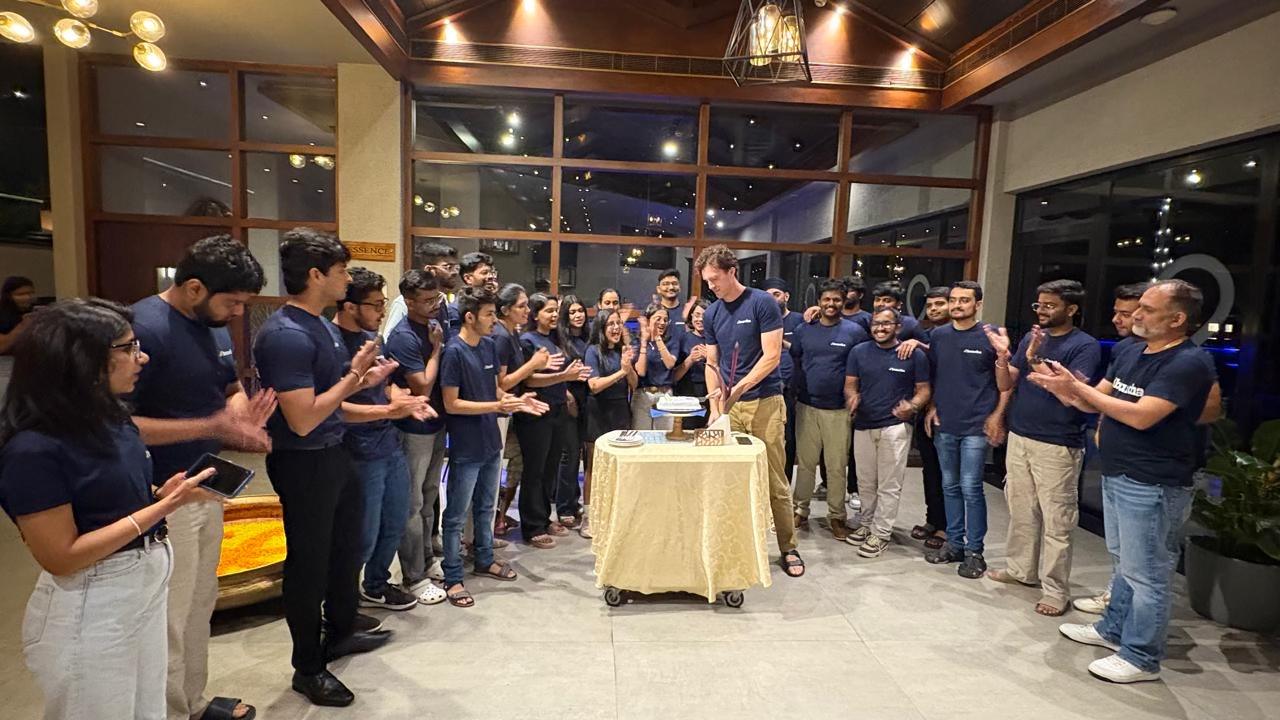
I spent 17 years in US tech, working closely with distributed engineering teams throughout. The deepest chapter came last: serving as final hiring authority and manager for a US startup’s Indian product and engineering entity, where I saw the gap from both sides at the same time.
“I’d read their resume again. This person clearly did impressive work. But in the interview, I couldn’t see it.”
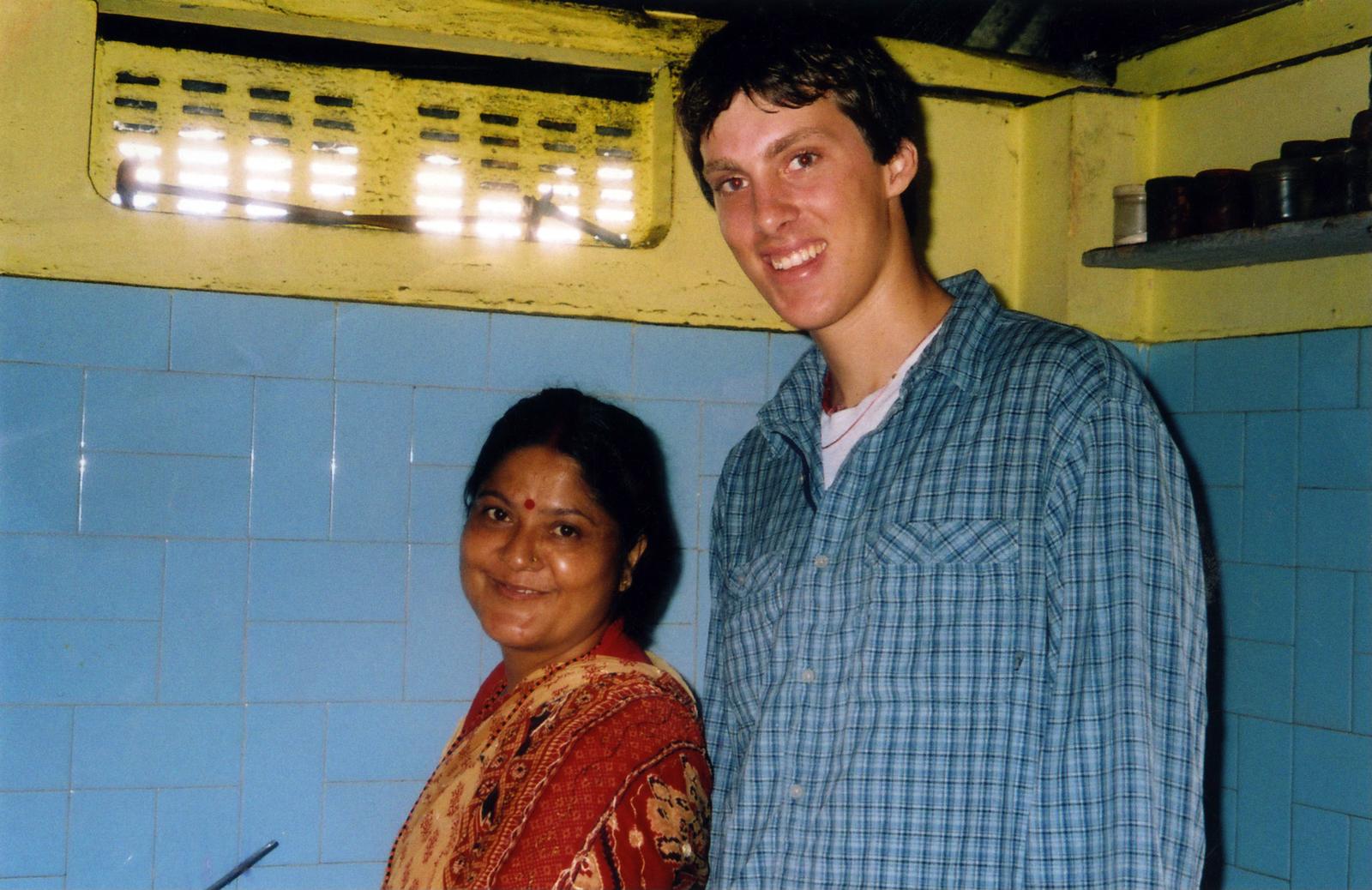
I lived five months with a family in Kalimpong, who gave me the name Arpan, meaning offering. I understand why Indian engineers communicate the way they do. I also know exactly what American interviewers are listening for, because I’ve been that interviewer, and the manager those engineers reported to.
Most coaching teaches you to memorize a script. Arpan teaches you to code-switch, so you can be who you are, in the language that wins US behavioral interviews. Every dimension is calibrated for the specific patterns Indian engineers bring to US interviews: the “we” that reads as no ownership, the context-setting that reads as rambling, the deflection that hides your best work.
A US-style behavioral interview opens doors — wherever the role sits, and whatever path takes you there. It is the last gate before the offer, and the skills you build here carry into the job, not just the interview.
I built this to help people create optionality and land work that changes things for them, because the right job changes more than a career. It changes a family’s future. I’d like to be part of yours. If you have a question or want to think out loud about an interview coming up, write to me at andrew@arpan.io.
Andrew Jacobson
Founder, Arpan
Find the gap before your next interviewer does.
Most engineers are surprised by what they actually say under pressure. Five minutes, six dimensions, scored and rewritten.
Start your free Diagnostic →